Showing posts with label gansler. Show all posts

Thursday, April 24, 2014

For Gansler and Brown it's All About Being Disliked Less

There is a great graphic included with the released of the new St. Mary's College Maryland Poll. It tracks candidate support from the first statewide poll taken in October of 2013 up though the college's just released poll.


Anthony Brown is the sitting, two-term LT. Governor. He has been running for this nomination for the past year. He has raked in the endorsement of every high profile Democrat in Maryland, multiple special interest groups, and Bill Clinton. And yet, his level of support has fallen by nearly 14 percentage points since October.

Doug Gansler is the sitting, two-term Attorney General. He scared away any competition in 2010 and was reelected with better than 90% of the vote. He's been running for the nomination since his first election as Attorney General (he often joked AG actually meant aspiring governor). He officially declared his candidacy back in September. Since then, his support has fallen by over 10 percentage points.

Heather Mizeur was a little known and very progressive delegate from Montgomery County when she announced that she was going to join the race as well. Few in the press took her seriously at the time, but she has run a clean and rather uplifting campaign. Her level of support has increased by 2.5 percentage points. Though she's still in the single digits, Mizeur is the only candidate gaining ground. She still has a lot of ground to make up, but it's a lot easier to gain on an opponent when that opponent is falling.

Meanwhile, "No Preference" has become a voter favorite. Mr. Preference was trailing LT. Gov. Brown by nearly 8 points in October, but has since surged 21 points to become the unmistakable leader in the race.

This is a sad state of affairs folks. We have two rather well known and established candidates in Brown and Gansler - and yet, the more they campaign and the more people learn about them the less people seem to like them.

Gansler has been hounding Brown on the failure of the MD health exchange, continually questioning his leadership skills and qualifications to office. Though the leadership in the Maryland General Assembly effectively whitewashed any meaningful investigation, it's clear the matter has harmed Brown. Brown often responds to Gansler's criticisms by dismissing the Attorney General as reckless and unprepared. Gansler has been dogged by early scandals concerning his treatment of state troopers assigned to drive him and owing to his presence at a graduation party where underage drinking was taking place. Many believe that at least one of those "scandals" was fed to the press by the Brown campaign and it's clear that they have harmed Gansler.

In recent days, Brown and Gansler have accelerated the war of words. The graphic above explains why. It's clear that voters don't like either man - so now, each is simply trying to become the one that voters dislike less. How inspiring. It's a sad state of affairs.

But Gansler and Brown had better watch out. They're each doing such an effective job convincing the public to reject the other that by Primary Day on June 24th they may just discover that they were so busy tearing each other down they didn't notice how effectively they were building Mizeur up.

* I would've offered a similar assessment of the GOP race, but there was no October poll of GOP voters.

Thursday, October 17, 2013

Quick Thoughts on New Gonzales Poll

Maryland's best pollster, Gonzales Research, has a new survey out looking at the Democratic primary in 2014. I'll have a longer post soon, but here are my quick thoughts.

Brown:
He's clearly the frontrunner, The poll has him topping Gansler 41% to 21%. The Brown folks made a decision last year to start the campaign early and gather endorsements. They knew that Gansler was the presumptive frontrunner and they wanted to upend that conventional wisdom - the succeeded.
But there are warning signs for Brown. After 7 years as Lt. Gov and months of dominating the MD 2014 news, he has a 4% favorability rate and 35% have a neutral opinion of him. Most concerning is the fact that he has 82% name recognition - but is at 41%. Is that his ceiling?

Gansler:
Fire your campaign manager now! The time between Halloween and Thanksgiving is a great time for a campaign shake-up, because people are distracted. Gansler is at 21% in the poll. But Gansler has an opportunity. Fully 37% of Democrats did not recognize his name - so some of Brown's lead may be simple name recognition (there is evidence of a name recognition effect in the poll of Attorney General candidates). Gansler needs to start spending some money and get his name out there. Gansler has to hope that the 37% who don't know his name didn't learn it this weekend with stories about speeding and mistreatment of state troopers, to say nothing of the "henchmen" comment. Gansler has to introduce himself to that 37%, before the Brown campaign introduces him.

Mizeur:
The news is just bad. The poll has her at 5%. Mizeur has been running a clean and positive campaign. An unorthodox campaign centered around community and volunteerism. Mizeur is running the kind of campaign that would make people proud of politicians. But no one knows it. Fully 79% of Democrats did not know her name. Gansler has the money to introduce himself to voters, Mizeur does not.

Summary:
Brown's ahead and his campaign should be proud of what they have accomplished. In a true three person race Brown's 41% would be fantastic. But this doesn't look much like a three person race. And with high name recognition and 7 years on the job, I wonder if Brown is nearing his ceiling at 41%?

Gansler has an opportunity to introduce himself to the 37% who don't know him and to start tapping into the one-third of undecided voters. With Mizeur at 5% this is starting to look like a two person race and Brown's clearest advantage was in a 3 or 4 person race. But before Gansler can recover, and he has plenty of time, he needs to shake up his campaign - the sooner the better. The Brown team has been at least two steps ahead of Gansler and now Gansler needs a team that is up to the challenge.

Tuesday, October 15, 2013

Maryland 2014 and the Nonsense of Geographic Balance

The latest stir in the Maryland governors race is the suggestion that Doug Gansler, from Montgomery county, made a mistake by not balancing his ticket with someone from the Baltimore Region. Gansler picked Jolene Ivey from Prince George's. Don Norris of the University of Maryland, Baltimore County said the pick, coupled with earlier controversies regarding the role of race in the campaign and the recent allegations about Gansler and his use of state vehicles, showed that Gansler is "knee-deep in quicksand."*  I have great respect for Don Norris, but knee-deep in quicksand? Maybe he's up to his ankles in a mud puddle. I've been arguing for two years that Brown is the favorite in this race, but that does not mean that Gansler is out of contention. And his "failure" to pick a Baltimore-based running mate has not placed him deeper in the muck and mire.

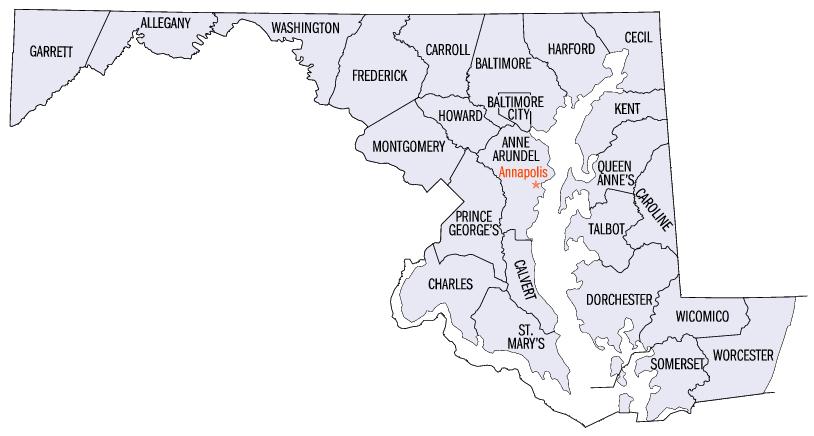
No one has suggested that Lt. Gov. Brown, from Prince George's, failed the regional balance test when he picked Howard County Executive Ken Ulman. This is apparently a balanced ticket. Nonsense! Let me be clear, the only folks who would argue that a PG/Howard ticket is geographically balanced while a MoCo/PG ticket is regional are folks who have never looked at a map of Maryland!

The reality is, we have two tickets representing what could best be described as central Maryland and the DC suburbs. The tickets represent the reality of the Democratic party in Maryland - it is comprised of a shrinking Baltimore City core that travels down the I-95 corridor before blossoming around the DC beltway in Montgomery, Prince George's, and Charles counties. Vast swaths of Maryland are essentially foreign turf to the Maryland Democratic party.

Map of Maryland Counties

None of the counties represented by the Gansler/Ivey or Brown/Ulman tickets offer a reasonable representation of the state. Montgomery and Howard counties are incredibly well-off and enjoy great schools and low unemployment - they represent an upper-income privileged Maryland quite unfamiliar to residents in Western Maryland, significant portions of Northern Maryland, and a lot of folks on the Eastern shore.

Demographics of MD, Montgomery, Howard, and Prince George's Counties
  Maryland Montgomery Howard Prince George's
White 53.90% 49.30% 62.20% 19.20%
Black 30.00% 16.60% 17.50% 64.50%
Asian 6.00% 13.90% 14.40% 4.10%
American Indian and Alaska Native 0.50% 0.40% 0.30% 0.50%
Native Hawaiian or Pacific Islander 0.10% 0.10% 0.00% 0.10%
Multi-Racial 2.50% 4.00% 3.60% 3.20%
Hispanic or Latino 6.90% 17.00% 5.80% 14.90%
Number of Schools in Newsweek's Top 20 Best High Schools in the state        
  7 4 1
Placement among the 25 wealthiest counties in US   11 3 -
Unemployment (July 2013) 7.10% 5.30% 5.50% 7.10%

More than anything though is the nonsense that a ticket that sought to balance the Baltimore and DC region has been a long standing tradition in Maryland politics - one that Gansler has broken.

For over 100 years between 1867 and 1970 Maryland had no Lt. Governor. The office was abolished. So any tradition can only extend to 1970. In our first election with a restored Lt. Governor in 1970 Marvin Mandel of Baltimore City selected Blair Lee III of Montgomery County - and I guess a noble tradition of balance was born. Like so much else that came from the 1970s though, it's worth asking if we started a tradition or a fad.

Maryland's next governor, Harry Hughes, hailed from Caroline county over on the Eastern Shore (imagine that happening today). His first term Lt. Governor was Samuel Bogley from PG county and his second term Lt. was Joe Curran, Jr. from Baltimore City. So I guess Hughes continued the tradition by picking someone from each region for each of his two terms? I guess Baltimore area voters in 1978 just had to have faith that when he ran for re-election in 1982 he'd dump Bogley and deliver on the tradition of regional balance. We could split hairs and recognize that Hughes relocated to the Baltimore region in 1971 when he became Secretary of Transportation - but the vast majority of his political career was spent and his base were on the Eastern Shore. If we wanted to get that technical then we'd need to discuss Ivey's years in the Baltimore region.

This brings us to 1986 and the election of William Donald Schaefer. Schaefer, then Mayor of Baltimore City, selected as his Lt. Gov. Senate President Mickey Steinberg. Steinberg was from..... Baltimore County.  And how did voters react to this tragically imbalanced and very regional ticket? By electing and re-electing Schaefer with overwhelming margins.

PG county Exec. Parris Glendening returned to the tradition in 1994 and picked Baltimore area attorney Kathleen Kennedy Townsend - but Townsend, lacking any experience as an elected official, was picked based on name recognition and fundraising potential more so than any commitment to geographic balance. Glendening's return to tradition was greeted with a very narrow election victory. The Baltimore/PG combination held for the next two governing teams. Baltimore's Bob Ehrlich picked PG's Michael Steele (though it's unclear why a Republican team would look to the Baltimore/DC balance tradition) and Baltimore's Martin O'Malley picked PG's Anthony Brown.

Based on this history of elections since 1970 there has arisen this mythology of Maryland gubernatorial elections that a ticket must be geographically balanced. The simple reality is Maryland's population is moving. The Baltimore region, and especially Baltimore City, was once the central hub of political power in the state - that is no longer the case. The new power hub in Maryland is wrapped around the DC beltway. Montgomery and PG counties are crucial to any Democrat seeking office - Baltimore is no longer the crucial region it once was. By picking Ken Ulman as his Lt. Governor Anthony Brown very much acknowledged that transition. Howard county borders both 20th Century Maryland to the its north and 21st Century Maryland to its south. With his pick, Brown wanted credit for picking a balanced ticket that held to tradition - and the press has largely given him that credit.

But the simple truth is this - neither ticket is any more geographically balanced than the other. To say Howard county is in the Baltimore region is like saying Montgomery County is in Western Maryland - it doesn't pass the sniff test. I understand that the US Office of Management and Budget places Howard in the Baltimore-Columbia-Towson, MD Metropolitan Statistical Area (MSA), but Anne Arundel and Queen Anne's counties are there as well - I don't think anyone would suggest a running mate from Queen Anne's would've brought the Baltimore region into the race. Howard straddles the line between Baltimore and DC, it's no more one than it is the other. In fact, I miss my days as a Howard resident - I could get the Baltimore and DC stations on my cable and satellite service! Montgomery county is in the Washington–Arlington–Alexandria, DC–VA–MD–WV MSA, but so are Frederick and Calvert - and most folks still consider Frederick and Calvert as distinct from Montgomery and Prince George's. So the MSA groupings are less than useful measuring sticks. Especially given all of the afore mentioned counties are in the larger Baltimore-Washington metropolitan area... confused yet? The map below may or may not help....


Montgomery, Howard, and Prince George's Counties are very different from one another and each ticket offers voters with a team that does represent very different parts of Maryland. But the notion that PG/Howard is balanced while MoCo/PG is not is utter nonsense.

Rather than obsessing over geography we should be looking at the candidates themselves. Both Brown and Gansler have made incredibly impressive choices. Both Brown and Gansler are offering voters an incredibly dynamic team. Both Brown and Gansler have picked future leaders in state politics. The simple reality is this, whether Democrats nominate Brown/Ulman or Gansler/Ivey they will have nominated an impressive team. On many crucial issue there's not a dime's worth of difference between the teams. This is probably why we have been inundated with meaningless stories about the state of the campaign, and hollow scandals, instead of substantive stories about the issues of interest to voters.

Let's hope that changes soon.

*In an earlier version of this post I failed to note that Don Norris identified several factors other than the Ivey pick as evidence of the Gansler campaign troubles. I have now included the larger context of his quote. I regret the error.

Friday, September 6, 2013

Does the MD GOP have a Deep Bench?

In a recent interview I was quoted as saying:
“It speaks to the sorry state of the Republican party in Maryland... You’re not going to have Doug Gansler … you’ve got an open race, the potential for a divisive Democratic primary. If they want anyone to ever take them seriously, they’ve got to win some statewide offices every now and then, which means trying to build a bench instead of running these throwaway challenges.”
 
Apparently this annoyed Red Maryland's Greg Kline. After taking the obligatory GOP talking point swipe against college professors (for the record, no one who knows me would ever think I read the Huffington Post) he suggested that the MD GOP has a significant and impressive bench of potential candidates.
The good assistant professor (actually I'm an Associate Professor) is right that a lack of a candidate even being discussed does reflect poorly on the MDGOP but he his so wrong about the state party not having a bench or plenty of qualified, potential candidates.... Any potential AG candidate knows that they would be on their own running statewide.  The state party is too much focused on creating a list of people to call and too little focused on what they are going to tell the person on the other end of the phone.
Kline then goes on to explain why the MD GOP cannot get potential candidates to agree to run for office in the state. "Candidate recruitment, like recruiting for a college football team, is about selling the experience and making someone want to be a part of something. This is exactly what the party isn't doing."

Kline then rattles off a list of what the MD GOP must do if it wants to recruit candidates. And Kline is spot on. Where Kline and I actually disagree is on just what constitutes "a bench of candidates." To me, a strong bench consists of candidates preferably with some degree of name recognition and a clear willingness to run if asked. Even better are candidates already holding office. The party would be best served if they were able to tap candidates from among the swelling ranks of elected GOP officials at the county level. Kline argues that the party has a deep bench simply because there are a lot qualified potential candidates in the state (there are 5.9 million people in the state, of course there are a lot of qualified potential candidates) - but those folks aren't willing to run. To me, that's not a bench. At best it's a two-legged stool. To build on Kline's football team analogy, the bench consists of those folks on the team and ready to play. It doesn't refer to the excellent potential players that are watching from the bleachers.

In 2010 the state GOP let Doug Gansler run unopposed for AG. Nationwide, 2010 was a fantastic year for the GOP - Maryland was a glaring exception that didn't need to be. In the U.S. Senate race Queen Anne's County Commissioner sEric Wargotz scored the highest level of support against Mikulski in two decades. With very little money and no debates Wargotz neared 40% of the vote.

As I have argued in prior posts, Maryland is not a 2-to-1 Democratic state. If you look at actual election results it's closer to a 60/40 state. Credible GOP candidates are able to hit that 40% mark, stronger candidates are able to exceed that share. But such strong candidates are rare in MD. Michael Steele and Bob Ehrlich were each able to top that 40% mark. William Campell and Anne McCarthy were quality Comptroller candidates in 2010 and 2006. In 2014 the state GOP has the potential to have strong candidates for governor and Campbell is likely to run again for Comptroller. Though I consider Harford County Executive David Craig to be the strongest gubernatorial candidate, Delegate Ron George is a solid candidate as well and either could give the Democratic nominee a real fight. Assuming Craig or George actually campaign for the job (as opposed to Ehrlich's lazy mess of a campaign in 2010) they should have no problem topping Ehrlich's 42% from 2010 and could even achieve victory.

It's important that the state GOP have quality candidates running for all statewide offices, yes they'd all face an uphill battle to win but a strong top of the ticket can boost turnout and help candidates down ballot cross the finish line in races for the state Senate, House of Delegates, County Commissioners, or other local offices. These down ballot winners then become the MD GOP's real bench. Because of redistricting and Martin O'Malley's political gerrymandering of state legislative districts the MD GOP is going to have a tough time holding onto it's meager 12 seats in the 47 seat state Senate. Falling below 12 seats would be a devastating blow to the morale of any already suffering party. The GOP needs to reach 19 seats in the Senate to truly have an impact as that's the number needed to filibuster. Gerrymandering makes that a tall order, improbable but not impossible - especially if the top of the ticket is strong. But at present, the state Republican party is just a mess. And so long as it is a mess the bench of candidates will be thin. Folks like Red Maryland's Greg Kline, Mark Newgent, and Brian Griffith have been offering the state GOP a lot a free and good advice, but I'm not sure the state party is organized enough to listen.

Though Kline may think that I'm some left-wing Huffington Post reading academic, the reality is that I'm an unaffiliated voter who would very much like to see Maryland's one party monopoly broken. I may disagree with the GOP on a host of issues, but the same can be said of the Democrats. I have no preference for one party over the other. What I do want is a vibrant and open debate of the issues, I want deliberation and not one party hegemony. I want the 40% of Marylanders who consistently vote against the Democrats to have a voice equal to their numbers, instead of the gerrymandered mess that has effectively held the GOP to less than 30% of the seats in the General Assembly and only 1 seat among the states congressional delegation. Republicans have figured out how to win and be relevant in states like New Jersey and Massachusetts. There simply no excuse for the party's continued problems in Maryland.

Wednesday, August 28, 2013

To Reclaim the Governor's Mansion, MD GOP Should Look to McKeldin

In 1950, incumbent Democratic governor William Preston Lane was seeking reelection. Lane had won the office 4 years earlier by a wide margin. But by 1950, Lane was in trouble. He had committed his administration to taking on the numerous infrastructure improvements that had been delayed by WWII - including the Bay Bridge. Lane financed these improvements with an increased sales tax. Few could dispute the need for the improvements, yet the tax proved to be quite unpopular. In 1950, Lane was challenged for the Democratic nomination by George Mahoney. Mahoney was a conservative Democrat who appeared often on ballots during that era. Lane survived the primary challenge but emerged from the contest weakened.

In the general election he faced off against the former Republican Mayor of Baltimore City, Theodore Roosevelt McKeldin. McKeldin trounced Lane 57% to 42% in the election. At the time, it was the widest victory margin for any gubernatorial candidate in the state and it remains the high watermark for GOP candidates for governor. McKeldin was an effective and successful chief executive. He was what many today would call a New England Republican or a Rockefeller Republican. He did not dismiss government as evil or even a necessary evil - rather it served an important purpose. For McKeldin, that purpose was largely infrastructure and Marylanders benefit from his legacy any time they travel I-695, I-495, or US Route 50. McKeldin was re-elected in 1954 and after leaving public life in 1959, was reelected Mayor of Baltimore City from 1963-1967. He was the last two term Republican governor in MD and the last Republican Mayor of Baltimore City.

So what does any of this have to do with 2014 and the MD Republican gubernatorial nominating contest? I argue there are several things to be learned from McKeldin and the 1950 election. One important lesson being unpopular policies can harm a candidate even if voters support the need for the policies. Lane was seriously harmed by the increased sales tax - even as voters recognized the good that was coming from the revenue. Over the past 7 years, Marylanders have been subject to numerous tax increases - sales, income, gas, fees - voters in this Blue state may support the programs being funded, but that doesn't mean they're not smarting from the lost income. The increased sales and gas taxes may be the most onerous. Voter anger weakened Lane and created an opening for McKeldin.

The 1950 contest tells us as well that divisive primaries can provide opportunities for Republicans. The battle between Mahoney and Lane left the party divided and Lane weakened. This kind of party division also helped Republican Spiro "Ted" Agnew win the governorship in 1966. There is tremendous potential for a very divisive Democratic primary contest in 2014. At present, Lt. Gov. Anthony Brown and Attorney General Doug Gansler have nowhere to go other than the governor's mansion. Each man will fight like hell to win the party's nomination. Such a pitched battle could leave the Democratic electorate divided - providing an opening for the GOP. Such divisions occurred in 1950, 1966, and even in 2002 - when many in the party were less than thrilled by the coronation of the lackluster Lt. Gov. Kathleen Kennedy Townsend. Townsend furthered party divisions by tapping a white Republican to be her running mate. Republicans won the governor's mansion in each of those years.

Finally, McKeldin was the right kind of Republican for Maryland. Make no mistake, McKeldin was a partisan. He was a proud Republican. But McKeldin was also a realist. In 1950, Democrats outnumbered Republicans by about 2.6-1. McKeldin could not win without winning over Democrats. Ever the pragmatist, McKeldin worked hard to win over elements of the Democratic electorate left divided after their party's primary. McKeldin took elements of Mahoney's and Lane's agendas and made them part of his own. He downplayed partisanship, instead focusing on accountability. He argued Lane had presided over wasteful spending and unnecessarily high taxes. He argued that Lane was inaccessible and simply a part of the Democratic party machine. As governor, he focused on governmental reform and increased transparency in the state. He stood up to unions and other entrenched interests - rarely invoking party.

Republicans do have an opportunity in 2014 to repeat 1950 (though repeating McKeldin's 15 point victory margin is beyond impossible- but winning by 1.5% or 0.15% is still winning). If Anthony Brown is nominated, he will carry with him the weight of Martin O'Malley's tenure in office. For all of the good - spending in check, funding for education, same sex marriage, etc... - he will also bear the burden of the bad - a declining tax base, mediocre job growth, higher gas, sales, and income taxes, and a government sorely lacking in transparency and electoral accountability. The GOP must look to the McKeldin model, it must run on an agenda that is economic and not social. It should make government a central issue, but not by portraying it as a force of evil. Rather, it must be presented as an essential partner. But a partner in need of reform and oversight. Brown must be portrayed as being part of the party machine, a candidate incapable of and unwilling to commit to needed reforms (his laundry list of endorsements by the establishment should make that an easy argument). The GOP needs to run a campaign based on reform and accountability. A campaign about anything else will just elect the democratic nominee.

In an upcoming post I'll look at the candidates for the GOP nomination, but at present, only one declared candidate appears ready to carry forward the McKeldin mantle and reclaim the governor's mansion in Maryland. And that's Harford County Executive David Craig.

Wednesday, August 14, 2013

"Ganslergate" and the Manufacturing of News

As everyone who pays attention to Maryland politics knows, the Free State is in the midst of a scandal! Ganslergate, as one reporter laughingly described it to me. The Washington Post obtained a secretly recorded meeting between Attorney General Doug Gansler and a group of supporters. As reported by the Post, Gansler was rather dismissive of Lt. Governor Anthony Brown's campaign for the Democratic nomination for governor.
“I mean, right now his campaign slogan is, ‘Vote for me, I want to be the first African American governor of Maryland. That’s a laudable goal, but you need a second sentence: ‘Because here’s what I’ve done, and here’s why I’ve done it.’”
The meaning of Gansler's comments seem clear - Anthony Brown doesn't have a record or a message to take to voters; rather his election would mark an historic first for Maryland.

I must admit, when I first read the story and the quotes I didn't get what the controversy was. Doug Gansler noted something that everyone knows - race still matters in American politics. It especially matters in Maryland where African Americans account for 30-35% of the  Democratic primary electorate and about a quarter of the general election voters. Despite the importance of African Americans as a voting bloc in Maryland, only two African Americans have ever been elected to statewide office - Michael Steele and Anthony Brown. And both were elected as Lt. Governors in a state where votes are cast for a Governor/LT. Governor ticket. So no African American has ever been elected to statewide office at the top of the ticket.

Everyone who covers, analyses, strategizes, and works on Maryland politics recognizes that race matters in our state elections. In 2002, it was widely regarded as a critical error when Democratic Lt. Governor Kathleen Kennedy Townsend picked a white Republican to be her running mate. That the choice risked alienating African American voters was openly discussed. When Republican nominee Bob Ehrlich picked Michael Steele to be his running mate, race was again openly discussed. In a particularly pointed editorial, the editors at the Baltimore Sun said of Steele he "brought nothing to the ticket but the color of his skin." Essentially, the editors were saying that lacking any record or accomplishments Ehrlich and Steele were relying on race to win votes.  There was no outcry over the Sun's comments - other than from Ehrlich and Steele.

In 2006, Steele decided to run for the U.S. Senate. The Democratic nominee was to be either Representative Ben Cardin or former Representative and NAACP president Kweisi Mfume. The impact of race on that contest was openly discussed. Under the headline "Maryland Senate Race May Hinge On Ethnicity," Washington Post reporters wrote:
"As they stand, the racial divisions are stark: In the primary, Mfume, who is black, gets 72 percent of his support from black voters, the poll shows. Cardin, who is white, gets 82 percent of his backing from white voters."
It's hard to imagine a more clearly divided electorate. The Post's reporters noted that Cardin was the stronger candidate in a general election match-up with Steele, even though Steele's support among African American voters jumped significantly in a hypothetical match-up against Cardin.

After Cardin won the nomination he received the Washington Post's nomination. In an editorial written just prior to the election, the Post dismissed Steele as a man with little experience, few accomplishments, and nothing really to offer voters. In the final paragraph, the writers note:
"A victory for Mr. Steele, an African American, would add diversity to the Senate. That is a worthy goal, and it is one reason given by a number of high-profile black Democrats for breaking party ranks to endorse him. But it is worth noting that even those backers have not made the argument that Mr. Steele would be an especially effective lawmaker or a leader on any particular issue in the Senate. Maryland deserves all that, and only Mr. Cardin, with his deep experience, can deliver it."

In other words, the Post editors believed that the only reason Steele was receiving support from black Democrats was because he was African American. In 2006, it was commonly accepted that Steele was counting on the fact that he would be the state's first African American Senator to deliver significant support from African American voters. I have a hard time seeing how Gansler's comments cross a line when they don't even come close to being as blunt as an editorial in the very paper that broke the "Ganslergate" story.

Since initially publishing the original story on Gansler's comments, the Post has doubled down with stories on the "fallout" and "flak" that Gansler is receiving. Yet in these stories, the reader is treated to folks who already support Brown feigning outrage over Gansler's comments. I have to ask, can it really be called "fallout" when folks who never intended to vote for Gansler reiterate that they still aren't voting for Gansler?

I spoke with several reporters yesterday regarding this story, most agreed (off the record) that there was nothing particularly damning or offensive in what Gansler said. But these reporters were writing stories about the "scandal" because it was in the Washington Post...

This is a ridiculous story full of false indignation. Gansler is perhaps guilty of one thing, Brown himself has never made this contest about race - in fact he never speaks of the issue (though Gansler's comments appeared to be directed at the Brown campaign). That's the double standard of contemporary politics. We all know that race has an impact on elections, we know there are racial divisions in voting choices, we know that race has influenced election after election in Maryland. And the Cardin/Mfume contest in 2006 suggests there will be a significant racial divide among Democratic voters come election day. In a three person contest, the severity of that divide will likely determine the outcome. But the minute a candidate references race he/she is accused of exploiting the issue.

But the issue of race and the potential for an African American candidate for governor do play a role in this contest. Gansler was trying to make the point that Brown has offered few, if any, proposals for the future. Gansler was trying to say that Brown has "no achievement, no record." Whether or not that's true is debatable, but the claim is pretty tame and standard stuff in Maryland and certainly consistent with opinions offered by the very paper now pushing this story when writing about other candidates.

I realize that this is a particularly boring time in Maryland politics, but that doesn't mean we need to create scandals just to have something exciting to write about.

I'll reiterate what I've said before - I am not affiliated with the Gansler campaign and have no dog in the Gansler/Brown hunt. I had hoped that Comptroller Franchot would run, when he dropped out my attention shifted to Ken Ulman, the he opted to run for Lt. Governor. At present, I have no idea who I'll support in the general election and as an unaffiliated voter I can't even vote in the primary. So I'm not defending my candidate... I'm just annoyed by what is really a pointless story.

Monday, August 12, 2013

Maryland 2014: Part 1 - The Democrats Running for Governor

It's been awhile since I've written about the 2014 gubernatorial contest in Maryland. In a post last September, I profiled the four men most likely to seek the nomination - Attorney General Doug Gansler, Lt. Gov. Anthony Brown, Comptroller Peter Franchot, and Howard County Exec. Ken Ulman. I mentioned Heather Mizeur as a "rumored to be thinking about it" candidate. I argued then, that Brown was the odds on favorite to win the nomination.
"If the 2014 primary were like a typical Democratic primary in recent years with only two credible candidates then certainly Gansler would be the favorite - but in a three man race his odds drop considerably and in a 4 man race a clear new favored candidate emerges from the pack - Lt. Governor Anthony Brown."
Much has changed since September... and yet very little has changed.

Two of the expected candidates are now out of the race.  The Franchot folks always understood thy had a very narrow path to victory, it was a path that relied on moderate and conservative Democrats outside of the I-95 corridor. The Franchot team understood that if Gansler and Brown split the progressive vote, and Gansler, Brown, and Ulman divided the I-95 vote, and if Franchot could compete with Gansler in their shared home turf of Montgomery County, and if Franchot could win over Democrats from parts of the state that feel ignored by the Democratic party, then Franchot could build an electoral plurality in a multicandidate race. It was a path to victory that needed every "and if" to fall into place. In the end, Franchot decided that he enjoyed being Comptroller too much to risk everything on a series of and ifs. It was probably the correct call. I had written and spoken favorably of Franchot and make no secret of the fact that he would have been my preferred candidate. He openly and passionately challenged the Democratic party status quo in the state and would have been the candidate most likely to embrace the types of good government reforms so desperately needed in Annapolis.

As for Ken Ulman, there had been rumblings for some time that the Brown campaign was working feverishly behind the scenes to get Ulman on board as Brown's running mate. Those rumblings turned out to be true and the Brown/Ulman team have been traveling the state fundraising and securing nominations all summer long. At first blush, this was a smart move by Brown. Not only did he eliminate a dynamic and appealing opponent - someone with the only real claim to the Baltimore region, which can really matter in a primary contest - Brown also absorbed Ulman's campaign war chest, and Ulman had proven to be a damn good fundraiser. Going into this contest, Gansler enjoyed a tremendous cash advantage, but the merging of the Brown and Ulman coffers largely eradicated that advantage. I'm still not certain if taking Ulman out of the race was the best option for Brown - I argued in January of last year that Brown's chances of securing the nomination increased with each additional candidate in the race. By tapping Ulman, Brown may have created a simple two man contest between himself and Gansler. In that scenario, Gansler has an advantage.


But of course, it's not a simple two man race; rather it's shaping up to be a pretty exciting three person race. Heather Mizeur officially announced that she was joining the fray just one month ago this week, but her intentions were clear months beforehand. Mizeur is among the very few women to ever seek the nomination for Maryland governor, and if elected she would be the Free States's first female governor. Mizeur is also one of only 8 openly gay members of the Maryland General Assembly. If she were to win the nomination, she would become the first openly LGBT candidate to run for governor on a major party ticket. Given the recent swings in public opinion in favor of marriage equality, Maryland's legalization of same-sex marriage (uphold by the voters at referendum), and the election of Tammy Baldwin to the U.S. Senate, Mizeur must feel a little bit of the winds of change at her back.

There are still the occasional rumblings about another candidate hopping into the race (Dutch Ruppersberger anyone?), and there's certainly plenty of time for a new candidate to get in - but one is left with a strong sense that the Democratic field is set - Doug Gansler, Anthony Brown, and Heather Mizeur.

As everyone understands, Maryland is a heavily Democratic state. The party claims 56% of registered voters to the GOP's 27%. As a result, the Democratic nominee is the odds on favorite to become the states next governor). So who will win the Democratic primary?

Last year, many a political observer assumed Attorney General Doug Gansler was the favorite. He had an impressive campaign war chest and had twice run and won statewide. The GOP didn't even bother challenging him in 2010 (I'll more to say about the GOP in a follow-up post). Gansler enjoys high name recognition and his work on behalf of the Chesapeake Bay and his official opinion that the state would recognize same sex marriages performed out of state have endeared him to state progressives - crucial in a primary. And Gansler hails from Maryland's most populated county - Montgomery. After the disaster that was the 2012 session of the Maryland General Assembly, Gansler's stock rose significantly. Governor O'Malley absorbed a tremendous amount of criticism (deservedly so) for the failure that was the 2012 session. Being part of the O'Malley team was no feather in Brown's cap that year.

But O'Malley quickly realized that the bad press from the failed session was harming his own presidential ambitions. Over the summer of 2012 he called two special sessions, one to settle the state budget and the other to address the issue of casino gambling in the state. O'Malley took control of the casino issue and worked hard at crafting a proposal acceptable to the House and Senate. Then, in November of 2012 O'Malley found himself symbolically on the ballot in Maryland not once, but four times. The casino measured passed by the Assembly was subject to voter approval, and three laws - marriage equality, the MD DREAM Act, and the new Congressional district map - were successfully petitioned to referendum. Would the voters rebuke O'Malley? The answer was a resounding "No." O'Malley carried the day on all 4 issues.

Then, the 2013 legislative session came and went with nary a hitch. The Assembly tackled several high profile issues - including a gas tax increase, a ban on the death penalty, off-shore wind development, and comprehensive gun control. It was an incredible string of progressive victories. Things were clearly breaking in favor of Brown.  He received O'Malley's endorsement early and since naming Ulman as his running mate Brown has collected an impressive portfolio of endorsements. In addition to O'Malley, he's been endorsed by Senate President Mike Miller, U.S. House Minority Whip Steny Hoyer, Baltimore Mayor Stephanie Rawlings-Blake, the Laborers International Union of North America, VoteVets.Org... the list goes on. In fact, almost daily I receive a press release from the Brown campaign announcing a new endorsement.

Meanwhile, Gansler has not formally announce a candidacy and has offered no hints regarding a running mate. Gansler, and his people, argue that no one other than political insiders are paying any attention to the 2014 race at this point. As such, there is little to be gained from making an announcement, picking a running mate, or collecting endorsements. There is some truth to Gansler's argument. Most Marylanders are not paying any attention to the 2014 race, but Gansler's audience is not most Marylanders. In 2010, only 25% of registered Democrats turned out for the primary. Primary voters tend to be the most dedicated and attentive voters - and these folks are likely paying some attention to the 2014 contest.

But for Gansler, waiting may well be the best course of action. To the extent that voters are tuning out the campaign, Brown is making headlines and receiving largely positive press during the time of year when folks are more concerned with their kid's summer camp and weekend traffic on the Bay bridge. By the time they snap back into reality in September (when Gansler makes his campaign official), Brown will have burned through most of his high profile endorsements and his naming of Ulman will be a memory. When Gansler announces his candidacy, how will Brown/Ulman counter program? When Gansler announces his running mate, how will Brown/Ulman counter program? When Gansler receives endorsement, how will Brown/Ulman counter program? The Brown campaigns needs to worry about peaking too soon and about burning through their positive press stories too early in the cycle. If Brown comes to be seen as the obvious frontrunner, the press will inevitably start looking for his weaknesses and any sign of weakness will be exaggerated.

There is another silver lining for Gansler. Brown is running as the consummate political insider, he is collecting endorsement after endorsement from the Democratic party establishment. He cannot claim to be anything but the candidate of the status quo. Maybe that's not so damaging in Democrat-friendly Maryland, but public confidence in government is at an all time low and Maryland has been criticized for it's lack of transparency and accountability in government. Being seen as the establishment's candidate may not be a winning strategy in 2014.  Brown has created an opportunity for Gansler to run as the only candidate who can shake up the system and claim some level of independence. The Attorney General is free from gubernatorial influence and with all of the high profile endorsements flowing to Brown - who in the establishment would Gansler feel beholden too?

The establishment is circling the wagons around "their guy" Anthony Brown, the guy who won't rock boat. But then there's Doug Gansler - as Attorney General he was more than happy to rock things. He was making progress protecting the Chesapeake while the General Assembly was waffling on the permeable surface tax, he was fighting for consumer protection long before the White House decided we needed a federal consumer protection agency. And same-sex marriage? Gansler was ahead of everyone else in Maryland on that issue. At a time when Team O'Malley and the General Assembly would rather have ignored the issue, Gansler stated that Maryland would recognize marriages from other states. It would be reasonable to argue that he forced the rest of MD's Democratic establishment to get on board.

If I'm a member of the Gansler team (and I'm not), I'm making the case that on issue after issue, Gansler was doing what he believed to be right for all Marylanders and not just what was best for the party establishment. I'd ask the question, do Marylanders want a tested and proven agent of positive change or a foot soldier for the status quo?

It remains to be seen whether Gansler will choose that strategy, but, while Brown has been travelling the state collecting endorsements Gansler has been traveling the state talking policy specifics as part of a “Building Our Best Maryland” tour. And Gansler has not chosen to narrow his focus to just feel-good policy issues. In a recent forum he tackled the weighty issue of prisoner recidivism in Maryland. It's a sad fact that our prisons are good at only one thing - creating repeat offenders. Once someone has served their sentence it is extremely difficult for them to return to society as productive members and many get caught in a prison revolving door. Gansler has proposed a number of significant changes for Maryland - including transitional housing assistance, hiding criminal convictions from potential employers if someone has been "clean" for 5 years, and better training and rehabilitation while in prison. It's never popular to talk about investing in those convicted of crimes, but it's the only way we're going to tackle our prison crowding problem where over 40% of released prisoners return to prison. Reducing recidivism would mean reducing crime.

Gansler has also proposed changes that would make Maryland government more transparent. Last year, the Center for Public Integrity released its “Corruption Risk Report Card” on which Maryland received an overall grade of D- and ranked 40th among states. As reported in the Washington Post, Maryland received an F on public access to information and legislative accountability. Among other reforms, Gansler envisions the creation of an inspector general who would facilitate access to public information. A proven agent of positive change or a foot soldier for the status quo?

And then there is Heather Mizeur. Mizeur was largely ignored by the Maryland political press until she shocked everyone by coming in second in a straw poll of Western Maryland Democrats. Mizeur has decided to run a rather unorthodox campaign. But Mizeur's decision to focus her campaign events around the themes of community and service may well resonate with the folks who get out and vote in primaries. So far her campaign events have collected supplies for a women's shelter, restored a playground, and cleaned a marshland. Though some Democratic party insiders have grumbled that she is too young and has jumped the queue by getting into this race only to serve some future political ambitions, Mizeur has countered that if she loses the primary she's done with politics. Mizeur is from Montgomery county - a crucial and vote rich county and she has strong connections to the Eastern Shore as she and her spouse operate an organic farm there.

Though Mizeur makes headlines as an LGBT candidate, her record on issues hits the mark for many a party activist. Mizeur was central in the effort to allow college age kids in MD  to remain on their parents insurance - well before this became the law nationally. She is a passionate defender of the environment and leading voice in the effort to prevent natural gas extraction via fracking in Western Maryland. In addition to her policy positions, Mizeur offers Maryland women a chance to finally crack the Annapolis glass ceiling AND she offers Maryland progressives a chance to say that we have turned the page on the issue of LGBT equality. Despite the challenges she'll face, I consider her to be the most exciting candidate in the race - and in a primary, excitement matters.

So who has the upper hand? I still argue the odds favor Brown. Having the party establishment behind you is a big deal in a low turn-out election where getting people to the polls is all that matters. Gansler and Mizeur will divide the Montgomery county electorate while Brown will be uncontested in his home turf of PG county. Though running mates rarely impact an election, Ulman certainly can help Brown in Howard county and Brown's connection to O'Malley will help in Baltimore City. In a three way race it can take as little as 33.4% of the vote to win - Brown is the candidate most likely to cross that mark in a multi-candidate race.

If Maryland voters feel O'Malley fatigue in 2014, then Brown could suffer the consequences. And Gansler will need to run against the O'Malley record on several key issues if he's going to damage Brown.

For Mizeur, her best hope is an all out negative battle between Brown and Gansler (that's also the GOP's best hope). In the midst of such a battle, her focus on community and service may offer the perfect alternative.

So, much has changed since I last looked at the 2014 race... and yet, nothing much has changed.

Next, I'll look at the MD GOP and the candidates for governor (announced and unannounced), a recent Red Maryland poll offers some interesting results.

Friday, August 9, 2013

The Hiatus is Ending...

I decided last year that I was going to go on a Freestater hiatus and focus solely on my tenure review (something that happens in a professor's seventh year... it's like an academic pon farr, but without the crazy hormones - violent rages and (academic) death are there though). I stopped almost all political writing and commentary, scaled back interviews on Maryland politics, and focused on my classes, book, and tenure.

I'm proud to say that I received tenure at the end of the May and my book, American Government and Popular Discontent was published shortly thereafter. I've had a nice summer with my family, but classes resume in 3 weeks, so...

The hiatus is over. Next week I plan to re-enter the world of Maryland politics with a nice little piece exploring the current state of the Maryland gubernatorial race and the GOP and Democratic prospects. As I argued last year, Doug Gansler was not then, and is not now, the favorite in the race. Heather Mizeur entered the race with minimal press attention, but has suddenly gained (well deserved) media attention. Anthony Brown eliminated a potential opponent by coaxing Ken Ulman to be his running mate - and the team has spent the summer collecting endorsements and cash.

On the GOP side former Harford county exec David Craig was the first man in and he has picked solid running mate whose conservative credentials well balance Craig's moderate politics. Delegate Ron George and failed Congressional candidate Charles Lollar are also on board. We're still waiting to hear from other potential candidates - perhaps none more important than ChangeMaryland's Larry Hogan.

After exploring the gubernatorial race, I plan to begin a series looking at the MD GOP and whether or not it can be saved (and whether it wants to be saved). The party is experiencing a revival at the county level, but still has no real impact at all on state politics. I'll begin by exploring the state senate seats the GOP would need to win to reach the 19 seats needed to mount a filibuster in the state Senate - 17 can happen, but 19 will require one hell of a race for governor.

I'm looking forward to jumping back into the fray.

Thursday, September 20, 2012

A Crowded Gubernatorial Primary in Maryland in 2014?

In January I published a piece in which I explored the likely Democratic field in the 2014 Democratic gubernatorial contest. As I saw it at the time: "there are likely to be four big names (and what a rarity that is - four credible candidates) seeking the Democratic nomination, Attorney General Doug Gansler, Lt. Gov. Anthony Brown, Comptroller Peter Franchot, and Howard County Executive Ken Ulman."

In that review I concluded that Lt. Gov. Anthony Brown, and not Doug Gansler, was the likely favorite in a 4 person race.
Though many observers of state politics argue Gansler is the clear front runner, I would suggest that conclusion is anything but certain. If the 2014 primary were like a typical Democratic primary in recent years with only two credible candidates then certainly Gansler would be the favorite - but in a three man race his odds drop considerably and in a 4 man race a clear new favored candidate emerges from the pack - Lt. Governor Anthony Brown. In a multi-candidate race featuring Brown, the closest competitor will be the candidate who can appeal to rural Marylanders in Western Maryland, the Eastern Shore, and Southern Maryland - that candidate is not (at least not yet) Doug Gansler.

Franchot has positioned himself as the candidate of fiscal constraint and is clearly attempting to create a relationship with parts of Maryland long overlooked by Democrats and Democratic candidates. If Franchot can become the candidate of "the rest of Maryland" while dividing the I-95 corridor vote, he may emerge atop the pack.
In the 9 months since I made those assessments I believe that they still hold. I argued at the time that Brown's greatest threat was likely to be O'Malley fatigue. The disaster that was the 2012 legislative session followed by the two special sessions that yielded O'Malley advocated tax increases on Marylanders and substantial tax cuts for millionaire casino operators I think the O'Malley fatigue problem will weigh heavily on Brown.

Franchot has been a consistent and forceful voice of opposition to the tax hikes and the to expansion of casino gambling. But Franchot has been especially vocal in his anger over the role of money in influencing the casino issue during the special session. His demands for disclosure of gambling related donations received by members of the assembly and his recent call for real time disclosure of contributions were all welcome calls for reform - that I believe resonate well with the public.

For these reasons and more I see Franchot's stock rising in the 2014 guber-stakes. Hints that Montgomery County Del. Heather Mizeur is considering a run adds in many ways to Franchot's stock. Mizeur is a rising star in the state Democratic Party and no one should underestimate her future. But in a multi-candidate primary I believe that Mizeur's presence only serves to divide the core progressive Democratic base. In a contest featuring Mizeur, Ulman, Gansler, and Brown the I-95 corridor will be split multiple ways and suddenly "the rest of Maryland" as I termed it in January becomes that much more crucial. That only helps Franchot.

But there are storm clouds threatening Franchot's chance in that 5 person race - a cloud in the shape of former Baltimore County Executive Jim Smith. In a July, 2011 piece I wrote of the 2014 contest and theorized a 3 person race that included Gansler, Brown, and Franchot. I concluded then that a three person race helped Franchot, but offered this caveat:
In a three-way race, if Gansler and Brown have split the base vote of the party, Franchot can emerge the victor with no more than 34% of the vote. It's a wise strategy, but also the only strategy available to him.

Only one thing could upend Franchot's approach - Jim Smith. Smith is the former county Executive from Baltimore County and a former judge. He is a moderate Democrat with a base of support in an important part of the state.

If Smith enters the race and Gansler and Brown split the base vote and Franchot and Smith split the moderate to conservative vote then anyone of them could become the nominee with no more that 26% of the vote.

I had since dropped Smith from consideration as I was hearing quite clearly that he would not be running, but today Maryland Juice is reporting that Jim Smith is considering a run... a 6 person contest.

I still believe Smith and Franchot would split the moderate to conservative vote. In such a scenario I think the odds shift back to Brown - but in many ways this mix of candidates throws the race wide open.

Stay Tuned...

Tuesday, January 31, 2012

Maryland 2014 and the Men Who Would Be Governor

The 2014 Democratic primary for Maryland governor may seem a long way off, but for the men interested in the nomination it looms large on the horizon. With all eyes turned to the 2012 legislative session of the General Assembly and Martin O'Malley's high profile gambit for a resume' of actual accomplishments I think it's worth taking a moment to look at the men who wish to succeed him.

At present, there are likely to be four big names (and what a rarity that is - four credible candidates) seeking the Democratic nomination, Attorney General Doug Gansler, Lt. Gov. Anthony Brown, Comptroller Peter Franchot, and Howard County Executive Ken Ulman.

Only two Republicans have won statewide election since 1980 (can you name the two?) so the odds do favor a Democrat winning the general election, regardless of the Republican nominee.

Though many observers of state politics argue Gansler is the clear frontrunner, I would suggest that conclusion is anything but certain. If the 2014 primary were like a typical Democratic primary in recent years with only two credible candidates then certainly Gansler would be the favorite - but in a three man race his odds drop considerably and in a 4 man race a clear new favored candidate emerges from the pack - Lt. Governor Anthony Brown. In a multi-candidate race featuring Brown, the closest competitor will be the candidate who can appeal to rural Marylanders in Western Maryland, the Eastern Shore, and Southern Maryland - that candidate is not (at least not yet) Doug Gansler.

Quick Candidate Profiles

Gansler
In a recent profile, Gansler described himself as "fiscally conservative" and “an unabashed, pro-business, moderate centrist Democrat.” Though this may be the image Gansler would want to project in a general election, his record and reputation suggest otherwise. In 2008, the U.S. Supreme Court ruled that the 2nd Amendment right to keep and bear arms was an individual right and that states were limited in their power to restrict such rights. Prior to the ruling, Gansler joined a friend-of-the-court brief submitted to the Supreme Court urging the justices not to extend the Second Amendment to the states. During the 2010 legislative session of the General Assembly, Gansler sent waves through Maryland politics when he issued an opinion that Maryland courts would likely recognize same-sex marriages performed in other states. As Attorney General, Gansler has made environmental protection a top priority and even created the Attorney General’s Environmental Advisory Council to advise him. In short, Gansler's tenure in office has been marked by the high profile pursuit of very liberal causes. To be fair, Gansler may be fiscally conservative, but there is little opportunity for an Attorney General to establishing those credentials. Make no mistake, Gansler will be the liberal in the 2014 primary. His advisory opinion on Maryland recognizing same-sex marriage, his environmental crusading, and his firm support of gun control would make it impossible for him to claim to be anything but a member of the progressive wing of the Democratic party. That said, Maryland has promoted past Attorneys General - seven have sought the governorship since 1900 and three have been elected. But no Attorney General has made the leap to Government House since 1946 - of the three that have tried since then none succeeded.

Franchot
This brings us to Comptroller Peter Franchot. Since early last year, Franchot has wisely used his role as Comptroller to lay claim to the banner of true fiscal conservative. Last summer, Franchot warned Maryland (but especially the Governor and General Assembly) that the state had become too reliant on the federal government for jobs and economic growth. What sounded like a wise warning in August now seems especially prescient given the failure of the Deficit Reduction Supercommittee. Maryland is uniquely dependent on the federal government. Fully 1/5 of the state workforce is employed by government at some level and 30% of the state's budget revenue comes from the federal government. If federal budget cuts are truly in our future, Maryland's golden days of low unemployment and job growth may be gone. More recently, Franchot criticized Governor O'Malley's FY 2013 budget proposal and argued for a moratorium on tax increases until the economy improves. In comments last week before the Maryland Association of Realtors Franchot singled out the Governor's plan to phase-out the mortgage interest deduction for upper middle class earners as especially troubling in a state with a still recovering housing market. In perhaps the most significant sign that Franchot will wear the banner of true fiscal conservative his warnings against state borrowing recently earned the scorn of the Baltimore Sun editorial page (a distinction likely to be viewed as a badge of honor by voters outside of the I-95 corridor). Franchot also has history on his side, of the six Comptrollers who have been elected in the past 90 years three were elected governor after serving as Comptroller. Marylanders tend to trust their Comptrollers.

Ulman
Howard County Executive Ken Ulman will have the benefit of being the only chief executive in the race and he will be the only candidate from the Baltimore region (authentically given that Ulman's parents are from Baltimore). Since the 1950s, 8 of the last 10 governors have come from Baltimore City or County. Five of the last 10 were county executives or mayors - suggesting Maryland voters like to elect candidates with executive experience. Though once the political power base in the state, Baltmore City and the larger Baltimore region have witnessed the state's population and political power as it slowly, but clearly migrates to the DC suburbs in Montgomery and Prince Georges Counties. The greater Baltimore region of Baltimore City, as well as Anne Arundel, Baltimore and Howard County is home to 41% of the state's registered Democrats. Ulman has been in the headlines recently criticizing the Governor's proposal to shifted millions of dollars in teacher's pension costs to the counties in an effort to balance the state budget. Ulman cannot easily be defined as liberal or conservative - he is, dare I say, post-partisan. Even as he criticized the Governor's budget, he has been lauded for the county's innovative health reform efforts and Ulman was central to the state's receipt of a federal grant to bring broadband to the state.

Brown
Then there is Anthony Brown. Brown has great resume' for governor. Brown is an Iraq War veteran and Bronze Star recipient, he served nearly 3 decades in the Army and is a Colonel in the Army Reserves. Brown represented legislative district 25 in Prince Georges County from 1998-2006 and was House Majority Whip. The downside for Brown is that even with that incredible resume' many folks in Maryland wonder just who he is. If his goal is to become the next governor of the state, he has not used his time as Lt. Governor as well as one might expect. Brown also has the weight of history working against him. Since the office of Lt. Governor was restored in 1970 no Lt. Governor has gone on to be elected Governor. In fact, only one has even managed to secure the party nomination. That said, he will undoubtedly lay an early claim to the significant African-American vote in the primary. African-Americans compose roughly a third of the Maryland population and a quarter of the registered voters, and are the most reliable Democratic voting bloc - yet the Democratic Party has never nominated and run an African-American candidate at the top of any statewide ticket. Brown is an accomplished legislator with an impressive resume and I believe that African-American voters would be quick to rally around his candidacy.

Looking at the Candidates Strengths/Weaknesses

Gansler and Liberals
In a primary, typically the most committed and partisan activist vote. For Democrats that would mean liberals. In the 2008 presidential primary, 52% of the Democrats voting described themselves as liberal. Laying claim to 52% of the electorate in a 4 man race is no small accomplishment, but it gets more complicated. A further review of the exit poll data suggests that no small share of the Democrats' liberal base is composed of a significant number of African-Americans. This worked out well for Barack Obama as he won 84% of the African-American vote. For Gansler, however, it means the liberal base will be divided and that 52% will be divided between Gansler and Brown - and do not discount Ulman's appeal, especially based on Howard County's health reforms.

Gansler is from Montgomery County and has a record of winning county-wide having served two terms as the states attorney. Montgomery County is home to 16% of the state's registered Democrats. Unfortunately for Gansler, Franchot is also from Montgomery County and represented parts of the county in the General Assembly - so the two men will split the county's votes. Well over a third of the county's registered Democrats are African-Americans and Brown is likely to claim a significant share of them as well.

Brown and African-Americans (please see ***note at end of post)
African-Americans are the Democratic Party's most loyal voting bloc and I believe that the state's many African-American communities will be eager to elect the state's first black chief executive. By my calculation, African-Americans are about 38% of the state's registered Democrats. Barack Obama received 84% of their vote in 2008 and, again based on my own calculations, Kweisi Mfume received about 85% of the African-American vote in the the 2006 Democratic Senate primary. This represents a significant advantage for Brown. In the 2006 primary (which featured a competitive nomination race for Comptroller and Senator) only 30% of state Democrats voted. By my estimation, African-Americans were roughly 38% of that turn-out.

Based on current voter registration totals, a 30% primary turn-out would translate into 577,600 voting Democrats. Assuming African-American and white turn-out is similar then 38%, or 219,500, of the Democrats would be African American and based on past elections Brown would win 84% of their vote, or 184,400 votes - 32% of the total votes cast. So before including his share of the white vote, Brown receives nearly 1/3 of the vote in a 4 man race.... that's quite an advantage.

Ulman and the Baltimore Region 
Those same 2008 exit polls show 48% of voters came from the greater Baltimore region. So being the Baltimore candidate would be a smart strategic move. No other candidate has a clear claim to the region, but of the 48%, nearly a third were from Baltimore City. Nearly two-thirds of City residents are African-American and that means that some of Ulman's "Baltimore advantage" would be diminished as he loses voters to Brown. That said, Howard County is a swing county in a crucial location. Howard is literally the connective tissue that links the Baltimore region with the DC suburbs in Montgomery and PG. Beyond that, western Howard County links the the urban and suburban I-95 corridor with rural Western Maryland. Additionally, Ulman's efforts in Howard County from the Healthy Howard program to environmental initiatives - such as green buildings - would allow him to challenge Gansler's claim to the liberal base.

In many ways, Howard county encapsulates the diversity (economically, geographically, socially) that make Maryland great. Ulman's ability to win there may speak to an ability to appeal to the diverse elements of Maryland's Democratic electorate. That said, Howard County is one of the wealthiest counties in the nation and that may work against Ulman as he campaigns in Allegany and Garret County in the west or Wicomico in the east - something will be necessary in a 4 person race. Ulman has maintained Howard's AAA bond rating and kept the county's books in balance - but I think he has a better chance of appealing to the party's liberal base than to more conservative Democrats outside the I-95 corridor.

Franchot and Forgotten Maryland
As I consider Franchot's emphasis on fiscal conservatism I am convinced that he has given a great deal of consideration to the 2014 primary as he has adopted a very wise campaign strategy should he run in a 3 or 4 man race for the nomination. As Comptroller, Franchot cannot initiate new programs like a County Executive, he cannot head taskforces like a Lt. Governor, and he cannot wade into high profile cases like an Attorney General. But, the Comptroller of the state of Maryland is uniquely positioned to take on issues of fiscal prudence. His position on the Board of Public Works makes him the equal of the Governor with regard to budget cuts when the Assembly is not in session and that role gives him every right to establish an independent fiscal identity in the state - he was, after all, elected by the voters independent of the Governor. The Comptroller commands a staff of over 1,100 and sits on the capital debt affordability commission, the commission on state debt, and the board of revenue estimates (among others) - those positions, combined with the Board of Public Works make the Comptroller a key point of citizen contact within the state.

Surveying the 2014 primary landscape one can easily see a battle for the I-95 corridor from Baltimore City, southern Baltimore County, north and west Anne Arundel County, as well as Howard, Montgomery and Prince Georges (and northern Charles) counties. Gansler, Ulman and Brown all have advantages that are very much confined to that area - an area home to 81% of the state's Democrats. But that leaves 17 counties and nearly 20% of the Democratic electorate with no champion. Franchot's fiscal conservatism and swipes at the federal dependency of central Maryland can clearly be understood as an appeal to voters outside of the I-95 corridor who often feel overlooked by the state's Democratic party.

The Role of "the Rest of Maryland" in 2014
All four potential candidates have some claim to the central Maryland I-95 corridor. Gansler, Brown, and Franchot hold statewide office, Brown hails from Prince Georges County, Franchot and Gansler have electoral histories in Montgomery County. Ulman represents Howard. The I-95 corridor may include 81% of the primary electorate, but 81% divided among 4 candidates comes out to about 20.25% per man - in a four person race someone needs to top 25% statewide. That's why rural Maryland is likely to figure far more predominantly in 2014 than it has in any recent Democratic primary.

At present, none of the 4 expected candidates has natural claim to voters in Western or Southern Maryland or on the Eastern Shore. Since none of the candidates are native to those parts of Maryland, the candidate who can find a message that resonates will be best positioned to claim those voters. For Gansler, I do not see how he overcomes his perceived liberalism. Further, he risks alienating his liberal base by trying to present himself as a fiscal conservative. Brown will be harmed by his affiliation with O'Malley. If this year's budget is approved then Brown will be part of an administration that was responsible for two significant tax increases (2007 and 2012) and that "declared war" on rural Maryland. Ulman's innovations in Howard County could become liabilities in rural Maryland where the median income is often half that of Howard County. For Franchot, his past as a liberal Democrat in the General Assembly is likely to be overshadowed by his more recent work as Comptroller. Because it is a fiscal position he does not have the added baggage of social issues to work against him in rural Maryland.

In a four way race featuring Brown, Franchot, Gansler, and Ulman the simple math favors Brown owing to the power of African-American voters in the Democratic electorate. But Brown is likely to be harmed in many parts of the state by his association with O'Malley. Gansler has the money and clearly the ambition but it's difficult to see how Gansler broadens his appeal beyond white liberals in central Maryland - and even among them he will face competition. Ulman brings established credentials as an executive and the promise of a post-partisan age, but will need to establish statewide name recognition beyond the orbit of Howard County. Franchot has positioned himself as the candidate of fiscal constraint and is clearly attempting to create a relationship with parts of Maryland long overlooked by Democrats and Democratic candidates. If Franchot can become the candidate of "the rest of Maryland" while dividing the I-95 corridor vote, he may emerge atop the pack.

The 2014 race for the Democratic gubernatorial nomination will be anything but boring, recently released campaign fundrasing numbers show that all four men will have the money needed to compete. Each of the possible candidates bring much to the table in the form of strengths and limitations. Each can lay claim to crucial elements of the Democratic electorate. At present, Gansler has far more money, Brown has a crucial voting bloc and an incredible resume', Ulman has the experience as an executive, and Franchot has a message that truly resonates in the current environment.

I believe that a four man race favors Brown, but he may have to overcome O'Malley fatigue and an electorate hard-pressed to think of an O'Malley accomplishment. In that event, or if this turns into a three person race, the candidate who can consolidate the voters outside the I-95 corridor is likely to emerge the victor.

*** I hasten to add a very important caveat. In no way do I mean to suggest that African-Americans would support a candidate simply based on skin color. Republican Michael Steele's inability to make in-roads with African-American voters in 2006 and Republican Charles Lollar's similar inability in the 5th Congressional District in 2010 clearly demonstrate that African-American voters care more about issues than about race. What Obama in 2008 and Mfume in 2006 show, however, is that when faced with a choice of candidates who share similarly acceptable policy views African-American voters overwhelmingly support the African-American candidate. An easily justified choice given the population's history of being denied representation.